Spaying and Neutering Cats and Dogs: When and Why
Spaying and neutering are some of the most common operations we do, and some of the most useful. They do not just stop unwanted litters. They can also protect your pet's health.
What are spaying and neutering?
In females, spaying means we remove the ovaries, and often the womb too. In males, neutering (castration) means we remove the testicles. The operation is done under general anaesthesia, so your pet feels nothing.
The health benefits
- No unwanted litters. Cyprus has many stray cats. Every operation helps stop animals being born without a home.
- No heat cycles. Your cat will not call loudly for days, and your female dog will not bleed or attract male dogs.
- Protection from pyometra. This is a serious womb infection that can be life threatening.
- Fewer mammary tumours. The risk drops a lot, especially when spaying is done young.
- No testicular problems in males.
- Calmer behaviour. Many cats roam less, spray less and fight less. In dogs, the effect on behaviour varies from dog to dog.
At what age?
Cats can be spayed or neutered from about 4 months of age. For dogs there is no single right age. It depends on size, breed and sex, because the timing can affect some joint problems, urinary incontinence and some cancers, especially in large breeds. We will talk it through together and decide if and when the operation is best for your pet.
Surgery day
- The night before: no food, as we will tell you. Water is usually fine.
- In the morning: you bring your pet to the clinic and we do a check before the anaesthetic.
- The operation: done under general anaesthesia, with pain relief.
- Going home: in most cases, the same day.
Operations are done by Dr George Karantos, who holds a GPCert in Small Animal Surgery.
Recovery at home
- Rest for about 10 to 14 days. No running, jumping or stairs.
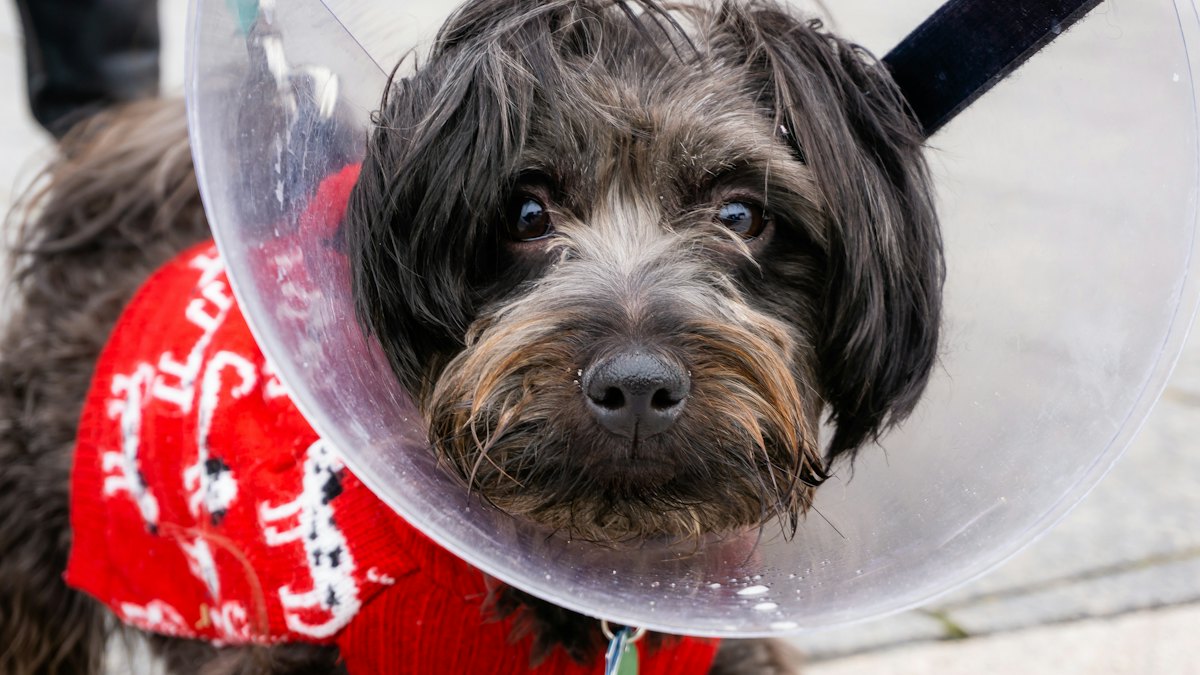
- A protective cone or body suit, so your pet cannot lick the wound.
- Check the wound every day. If you see redness, swelling or discharge, call us.
- Come back for the wound and stitches check when we tell you.
Myths we often hear
"She should have one litter first." No. There is no health benefit from having a litter before spaying.
"He will definitely get fat." Energy needs usually drop after the operation, so portions often need to be smaller, but with the right food and exercise your pet can stay at a healthy weight. We will give you advice on feeding.
Common questions
Will my pet be in pain?
We give pain relief before and after the operation, and you get clear instructions for home. Most pets are much better within two or three days. If you think your pet is in pain, call us.
Is the anaesthetic safe?
No anaesthetic is completely without risk, but in healthy young animals the risk is very small. Before the operation we examine your pet and, where needed, run blood tests at the clinic.
Can older pets be spayed or neutered?
Yes, adult animals can have the operation too. In older pets we do a more careful check before the anaesthetic. We will talk through the pros and cons for your pet.
When can my pet eat afterwards?
Usually a small meal the same evening. The next day your pet can slowly go back to normal food. We will tell you exactly what and how much to give.
Sources and further reading
The facts in this article are based on guidance from international and European veterinary organisations.
Want to talk about spaying or neutering?
Book a check-up. We will tell you the best age for your pet and answer all your questions.
📞 22 015979This article is for information only and does not replace an examination by a vet. If you are worried about your pet, please contact us.